
Updates
A Hardcore Roundup: An Analysis of High-Power Air-Cooled Laser Welding Machine Brands and Their Advantages
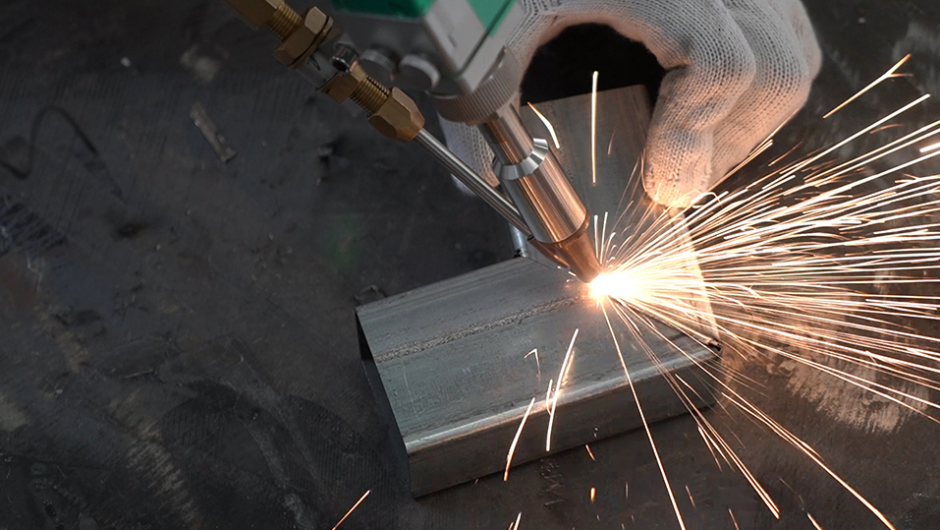
In recent years, the handheld fiber laser welding sector has experienced rapid evolution, with high-power air-cooled laser welding machines shattering the industry's long-held belief that "high power requires water cooling." Thanks to advantages such as the elimination of water tanks, compact size, and instant startup, these machines have quickly swept through markets including sheet metal processing, doors, windows, railings, and steel structures. Air-cooling technology has advanced from early low-power ranges (800–1000W) to the high-power 1500–2000W range, effectively resolving pain points associated with traditional water-cooled models—such as water supply limitations, mobility challenges, and complex pipeline maintenance. Against this backdrop, this article provides an in-depth review of mainstream high-power air-cooled laser welding brands, analyzing them from two perspectives: core laser source manufacturers and complete equipment manufacturers.
I. Core Laser Source Brands
1. Raycus Laser
As a leading fiber laser enterprise, Raycus delivers equipment with true rated power output and stable power curves, featuring mature 1500–2000W air-cooled laser source technology. Its excellent temperature control algorithms ensure minimal thermal drift during prolonged welding and robust performance in high-temperature environments, making it ideal for sheet metal factories that prioritize long-term stability, high-volume processing, and reliable after-sales support.
2. Maxphotonics
A long-established domestic manufacturer of industrial fiber lasers, Maxphotonics offers equipment with high photoelectric conversion efficiency and lower energy consumption for the same power output. Its heat dissipation solutions are specifically optimized for handheld welding conditions, making the equipment suitable for businesses processing thin to medium-thick plates.
II. Mainstream Air-Cooled Complete Equipment Brands
1. Qilin Laser
A key player in domestic laser welding equipment, Qilin Laser has deeply cultivated the field of lightweight air-cooled systems. Its entire product line features self-developed air-cooled lasers and a heat dissipation structure utilizing 44 copper tubes. Field tests demonstrate continuous 24/7 full-load operation in 45°C workshops without any power degradation, as well as reliable startup and operation in outdoor environments as cold as -40°C.
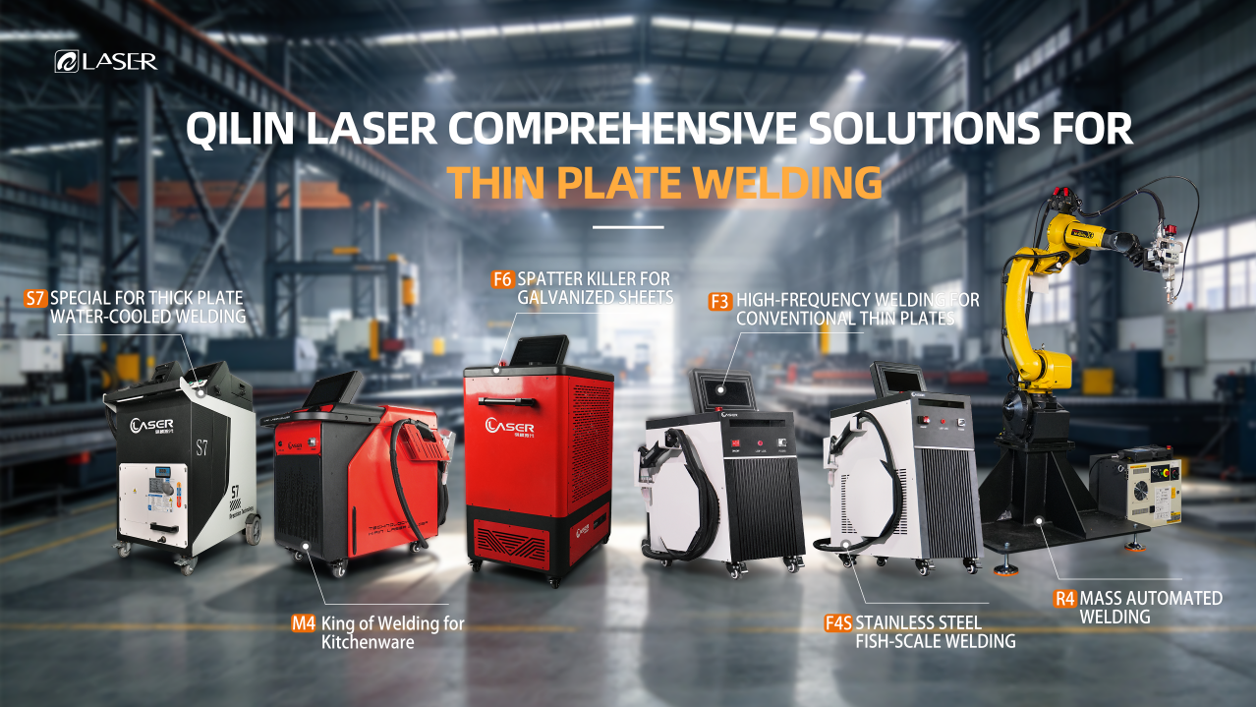
Its F3, F4, and F6 models cover a power range of 800W to 2600W; notably, the 2600W air-cooled F6 model can stably weld carbon steel, stainless steel, and aluminum plates up to 6mm thick, fully matching the deep-penetration welding performance of traditional water-cooled models.
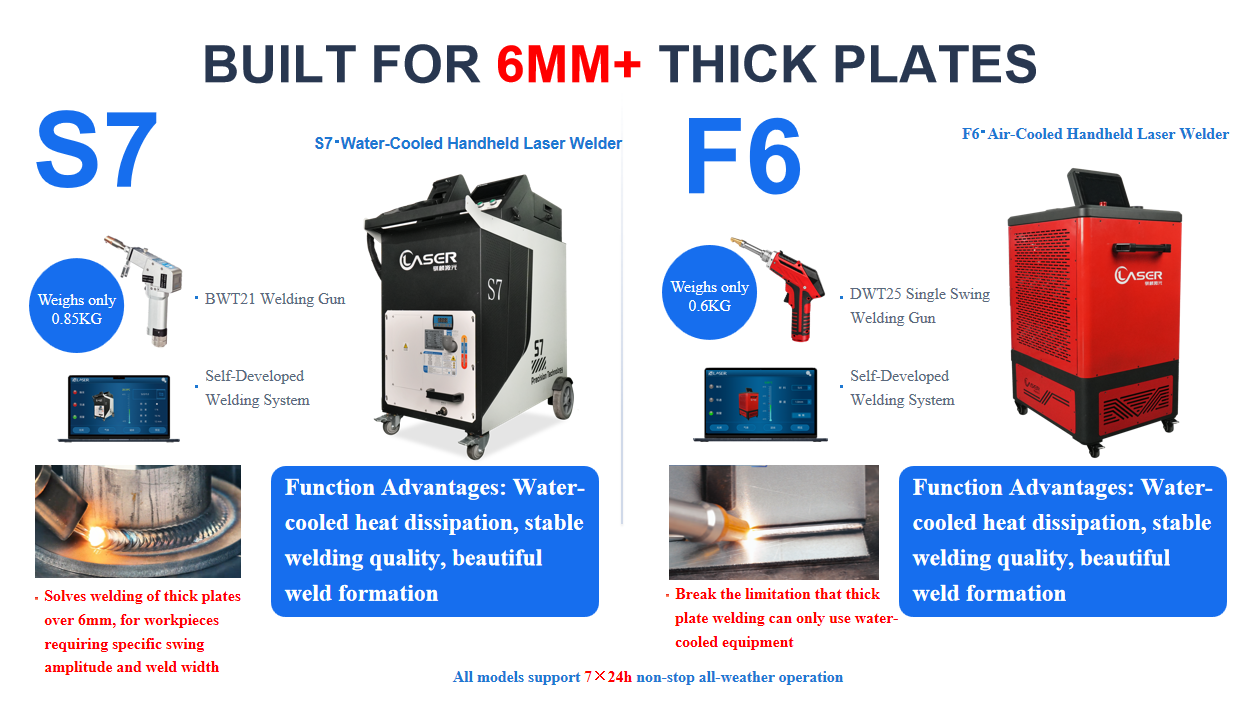
When paired with a single-wobble welding gun (weighing just 0.3kg) or a dual-wobble gun (0.4kg), operators experience 60% less fatigue during hours of continuous handheld use compared to traditional guns. These units are ideal for scenarios requiring frequent mobility, such as welding hardware products or performing on-site outdoor repairs.
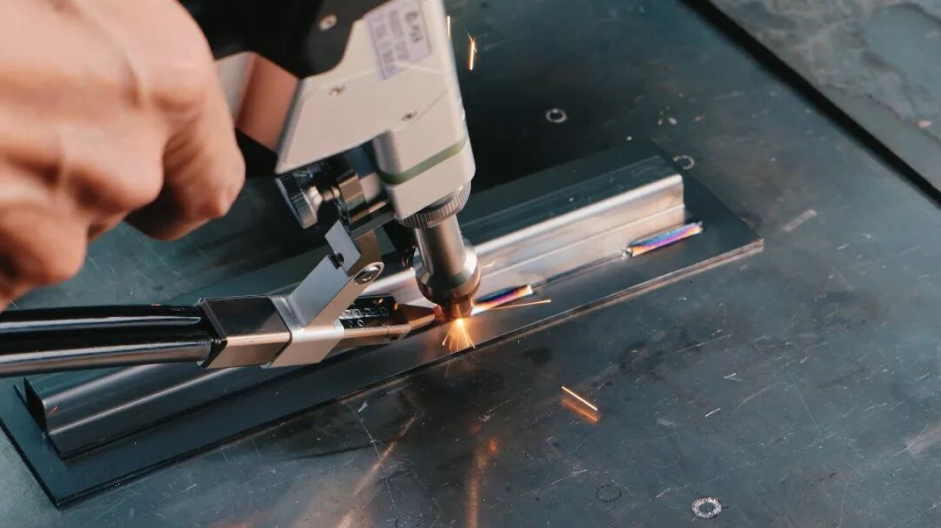
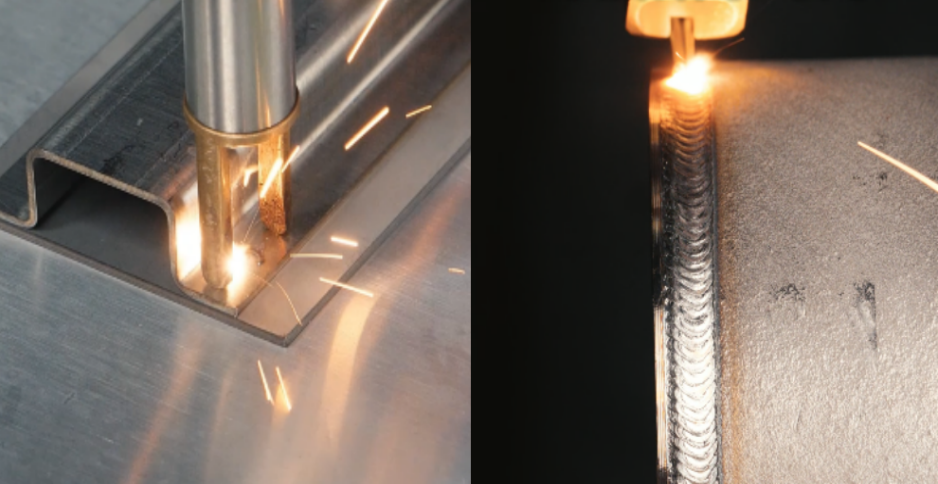
Additionally, the recently launched second-generation M4 air-cooled dual-wobble welder integrates multiple modes—including pulse, continuous, "fish-scale" (ripple), segmented, and rivet-welding—offering excellent adaptability for both thick and thin plates. It features a robust library of proven sheet-metal processing techniques for applications like seamless spot welding of stiffeners and multi-mode dual-wobble fish-scale welding, effectively meeting the complex demands of frontline production.
2. HRLASER
The complete machine undergoes deep integration and tuning with Maxphotonics lasers, featuring synergistic hardware and software optimization. Its "Hongtong" A1MD30 model weighs only 28kg and utilizes intelligent phase-change technology, a stacked-fin heat sink, and temperature control algorithms to ensure smooth welding of ultra-thin materials (down to 0.2mm).
3. Bodor Laser
Leveraging extensive technical expertise from a major laser cutting manufacturer, the Eco series of air-cooled welders employs latent heat technology and a skived-fin heat sink structure. The 1200W model achieves a penetration depth of up to 4mm and integrates welding, cleaning, rust removal, and cutting functions into a single, versatile unit.
III. Selection Recommendations and Long-Term Value Assessment
There is no absolute superiority between air-cooled and water-cooled systems; it depends entirely on the application scenario.
1. Consider air-cooled models
If your operations involve intermittent work, movement between multiple workstations, outdoor engineering projects, or maintenance of ships and steel structures, an air-cooled laser welder is an excellent solution due to its portability and maintenance-free nature. Currently, air-cooled models ranging from 500W to 2000W can handle 95% of non-continuous, high-load welding scenarios.
2. Consider water cooling
Water-cooled models offer a distinct advantage only when your production line requires 24-hour, uninterrupted, full-load operation—specifically for fixed, high-volume, automated welding of thick plates within a factory setting.
In summary, high-power air-cooled laser welding machines are breaking the functional boundaries of traditional welding equipment through innovative solutions that integrate technologies and functions. When selecting a model, enterprises should prioritize laser quality, the air-cooling architecture, and the comprehensiveness of the built-in process library, making a choice based on their specific operational requirements. That concludes this session; see you next time!
