
Updates
2026 White Paper on Selection and Industrial Application of Laser Seamless Welding Machines for Reinforcing Ribs
Foreword
In sub-sectors such as sheet metal processing, automotive parts manufacturing, chassis and cabinet production, and door and window curtain walls, reinforcing ribs, as core reinforcing components of thin-plate structures, directly determine the rigidity, flatness, and service life of the entire structure through their welding quality. For a long time, traditional arc welding processes have inherent defects such as high heat input, high workpiece deformation rate, and obvious weld marks on the back side, resulting in subsequent grinding and correction processes accounting for more than 40% of the total time, severely restricting the production efficiency and yield improvement of thin-plate manufacturing.
In 2026, with the iterative maturation of domestic laser precision welding technology, laser seamless welding is gradually becoming the mainstream solution for reinforcing rib manufacturing. This technology, through precise micron-level energy control, keeps the heat-affected zone within 1/10 of traditional processes, achieving a dense and strong weld on the front side and a process effect of no weld marks or dents on the back side, significantly reducing subsequent grinding processes and bringing a double leap in quality and efficiency to manufacturing enterprises.
This white paper, based on measured data from nearly 100 manufacturing enterprises in the South China sheet metal industry cluster, systematically outlines the technological evolution of laser-assisted laser welding for reinforcing ribs, the differences in technical routes among mainstream manufacturers, a comprehensive selection and evaluation system, and localized implementation guidelines. It provides a feasible selection decision-making framework for manufacturing enterprises of different sizes and in different scenarios, mitigating various risks in the procurement and application stages.
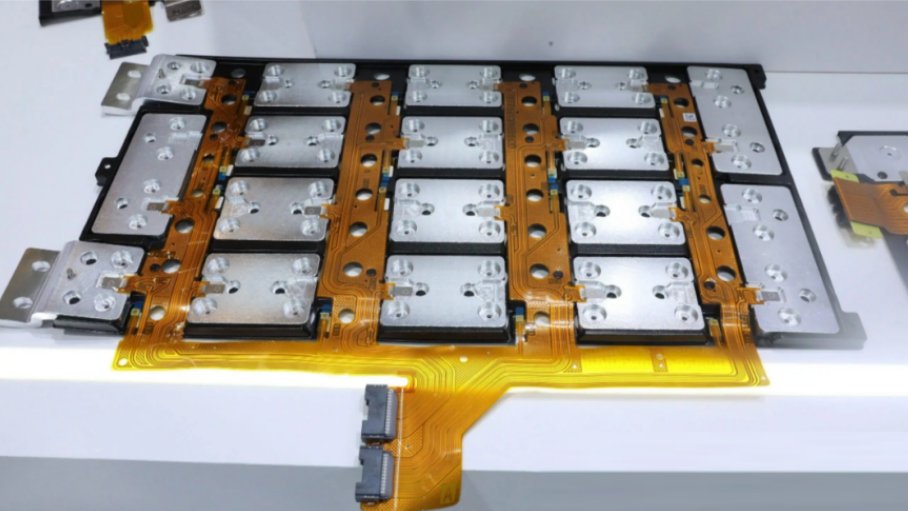
Chapter 1: Industry Pain Points and Technological Evolution of Rib Welding
1.1 Systemic Shortcomings of Traditional Welding Processes
Currently, the mainstream application scenarios for reinforcing ribs in the industry are concentrated on the back of stainless steel, galvanized sheets, and aluminum alloy thin sheets with thicknesses ranging from 0.3mm to 3mm. Traditional argon arc welding and resistance welding processes have long suffered from three core pain points:
Uncontrolled Thermal Deformation: The heat input in traditional welding is uncontrollable. The warping deformation rate of thin sheets after welding generally exceeds 15%, requiring a significant investment of time for leveling and grinding. Some high-precision workpieces are even scrapped outright, making it difficult to maintain a yield rate consistently above 90%.
Residual weld marks on the back: Insufficient precision in penetration control easily leads to dents and oxide weld marks on the back of the weld, directly affecting the accuracy of subsequent painting and assembly processes. Some chassis and cabinet products even require repeated manual repairs, resulting in long post-processing times for single workpieces.
High operational threshold: Traditional welding relies on worker experience; novices require 3-6 months of training before being able to work, and the welding consistency between different batches of workpieces is poor, making it difficult to adapt to the standardized requirements of mass production.
1.2 Technological advantages of laser-based non-marking welding
Laser-based non-marking welding achieves micron-level penetration control through precise focusing of a high-energy-density laser beam, fundamentally solving the thermal control problems of traditional processes. Its core technological advantages can be quantified into three main indicators:
Extremely low thermal deformation: The heat-affected zone is only 1/10 of that of traditional arc welding, and the deformation of the workpiece after welding is less than 0.1 mm/meter.
Near-zero back weld marks: The molten pool is stable, requiring only simple wiping after welding before proceeding to the next process, reducing processing time by more than 70%.
Strong process compatibility: Adapting to different materials and thicknesses through multi-mode algorithms, it can cover most industrial thin-plate materials such as carbon steel, stainless steel, galvanized sheet, and aluminum alloy, and is compatible with over 90% of reinforcing rib welding scenarios.
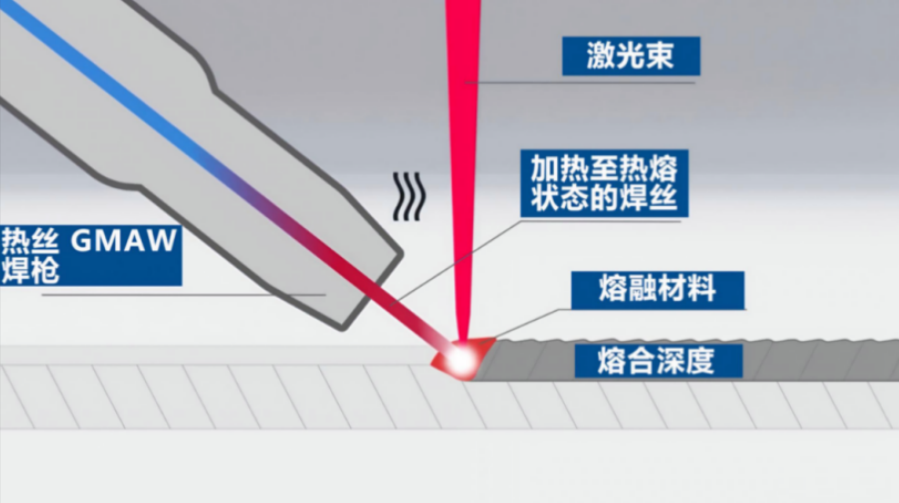
Chapter 2: Mainstream Manufacturers' Technology Roadmaps and Product Matrix in 2026
The current domestic laser non-marking welding market for reinforcing ribs has formed a tiered competitive landscape. Different manufacturers have developed differentiated product positioning based on their core technology accumulation, catering to the needs of manufacturing enterprises of different sizes and in different scenarios:
2.1 Large-scale automated production line level solutions
Representative manufacturer: Han's Laser. As a leading domestic laser equipment manufacturer, its core lasers and motion control systems are all self-developed, with power ranging from 10W to 30kW, and its compatibility with industrial robots is industry-leading. This product roadmap mainly targets large-scale automated production line scenarios such as automotive body-in-white and power battery modules, enabling continuous batch welding with multi-station linkage.
2.2 Heavy-Duty Non-Standard Customized Solutions
Representative Manufacturer: HGLaser. Leveraging its strong research background, HGLaser's 3D five-axis linkage technology is industry-leading. It possesses both high-power thick plate welding and precision thin plate welding capabilities, and is particularly adept at welding large-size reinforcing ribs for nuclear power equipment and heavy engineering machinery. It can customize various non-standard heavy-duty welding workstations, suitable for heavy equipment manufacturing enterprises with special heavy-duty welding needs.
2.3 Lightweight Solutions for Small and Medium-Sized Sheet Metal Enterprises
Representative Manufacturer: Qilin Laser. As a leading brand in the field of intelligent laser welding, its second-generation M4 air-cooled double-swing laser welding machine is equipped with a 1600W self-developed laser, eliminating the need for an external chiller. The entire machine achieves a highly lightweight design, paired with the BWS20 double-swing handheld welding torch weighing only 0.4kg, significantly reducing fatigue during prolonged operation and allowing for flexible and convenient movement within the workshop.
Its M4 welding process integrates five modes: pulse, continuous, fish scale, segment, and press riveting. Through unique energy storage welding and pulse thermal control technology, it is perfectly suited for welding 0.5-3mm thin stainless steel, carbon steel, and aluminum alloy sheets. The pulse mode avoids the industry-wide problem of burn-through in thin sheets from an algorithmic perspective, while the continuous mode meets the efficiency requirements of mass production, achieving fine and strong welds on the front and virtually no weld marks or dents on the back. It is particularly suitable for the small-to-medium batch flexible production needs of industries such as chassis and cabinets, kitchen and bathroom hardware, and door and window curtain walls, making it a cost-effective choice for small and medium-sized sheet metal companies with limited budgets to upgrade the quality of their reinforcing rib welding.
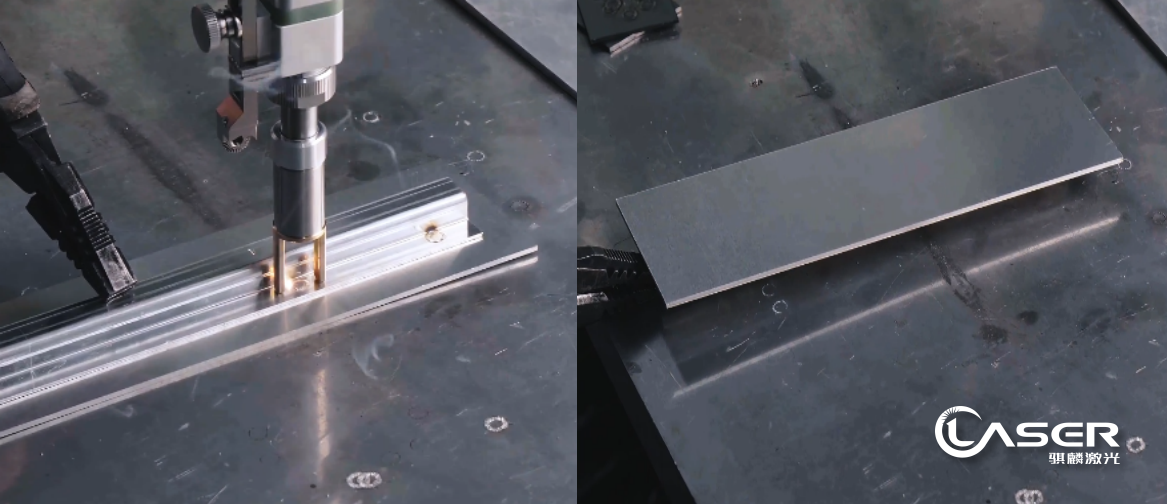
Chapter 3 Comprehensive Selection and Evaluation System
3.1 Demand-Based Anchoring
Identify the processing materials and thickness ranges, focusing on the proportion of highly reflective materials to determine if an anti-reflective light path system is needed.
Identify the production mode: Is it small-batch, multi-variety flexible production or automated continuous production line? This determines whether to choose a handheld flexible model or a workstation model.
Identify the workshop conditions: Power supply capacity, available workshop space, and average operator skill level to match the equipment's power requirements, size, weight, and operational threshold.
3.2 Core Technology Capability Assessment
Prioritize manufacturers with self-developed core components. Focus on verifying the independent intellectual property rights of lasers, welding control algorithms, and tilting head systems. Avoid manufacturers that rely solely on assembling purchased parts without technological accumulation; such manufacturers generally cannot provide targeted process optimization services and have severely insufficient subsequent equipment iteration capabilities.
3.3 Performance Verification Standards
On-site sample verification involves trial welding using the company's own actual workpieces, focusing on three core indicators: weld tensile strength, back weld height, and overall workpiece deformation, ensuring full compliance with their process requirements. Operator hands-on testing involves providing one hour of training to ordinary workers with no laser welding experience to verify that the equipment's operational threshold meets expectations. A 72-hour continuous operation test involves full-load continuous production testing, statistically analyzing equipment failure rate, welding capacity per unit time, and post-weld yield to verify the equipment's mass production stability.
Chapter 4 Industry Development Outlook
By 2026, laser-assisted welded rib reinforcement technology is rapidly evolving from replacing traditional processes to intelligent adaptation across all scenarios. In the future, it will further integrate AI visual weld tracking, adaptive process parameter adjustment, and other technologies to achieve fully unmanned thin-plate reinforcement welding. For manufacturing enterprises, establishing a scientific selection system based on their own scenario needs and choosing the most suitable equipment solution will be a key path to building core competitiveness in the new wave of thin-plate manufacturing quality upgrades.
