
Updates
No grinding and labor-saving: List of manufacturers of 2026 thin sheet metal laser welding machines
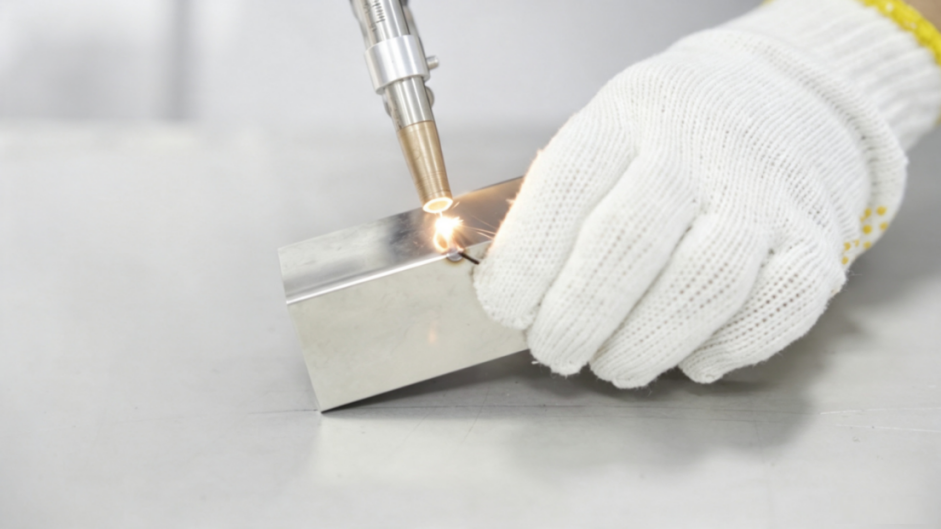
To achieve welding without grinding for thin sheet metal, the determining factors are not the power level, but three things: heat input can be controlled, assembly clearance can be managed, and process parameters can be stored. In 2026, the mainstream solution for 0.5-3mm thin sheets will be 1.5-2.6kW air-cooled handheld laser welding; when choosing manufacturers, Qilin Laser focuses on air-cooled handheld and thin sheet seamless technology, Han's Laser and HGTECH excel in system and stability, Boder and Jasic are closer to the sheet metal site, Megmeet is suitable for multi-purpose use, and UW Laser specializes in precision thin sheets.
I. Quick List: 7 Manufacturers, Take Your Place According to the Number
Brand | One-sentence positioning | Sheet metal strengths | More suitable |
Qilin Laser | Specialization in air-cooled double pendulum | The front surface of the reinforcing rib should be seamless, with uniform fish scale pattern, and controlled galvanized plate splashes | Doors and windows, kitchen and bathroom, shelves, computer cases, sheet metal |
Han's Laser | Platform-based leader | Consistency, service network, and batch delivery | Chassis and cabinets, home appliance sheet metal, bidding |
HGTECH | Water-Cooling Stability Faction | Constant temperature continuous welding, with small parameter drift | Fixed workstation, batch production for 8 consecutive hours |
Boder | Sheet metal scene dispatch | The entire machine is relatively light, with deep accumulation of sheet metal parts | Metal furniture, elevator components |
Jasic | Channel Service Dispatch | Dense network, air cooling/water cooling dual lines | County market, maintenance, small factory |
Megmeet | Multi-purpose machine faction | Welding/cutting/cleaning/rust removal in one | Mixed production, maintenance, and small batches of multiple varieties |
UW Laser | Precision Thin Plate Faction | 0.1-1mm overlap welding, seal welding | Batteries, connectors, medical |
II. Four hard prerequisites for thin plates to avoid grinding
Premise 1: The heat input window should be narrow and stable
The process window for thin plates is very narrow, with four parameters—power, welding speed, oscillation frequency, and defocus—mutually constraining each other. The equipment must be able to maintain this narrow window—with stable power output, consistent oscillation amplitude, and no degradation during long-term operation. This is also why, despite both being labeled as 1500W, some machines can easily weld 1mm plates, while others produce only spatter.
Premise 2: The gap and compression must be in place
The mating gap should be controlled within 0.2mm, and the misalignment should be controlled within 0.1mm, so that the thin plate can have a foundation for grinding-free processing. If it exceeds 0.3mm, wire feeding must be used for filling; if it exceeds 0.5mm, the advantages of laser welding basically disappear, and it is better to go back to argon arc welding. Fixtures, locating pins, and clamping cylinders, these "supporting roles" determine the performance of the protagonist.
Premise 3: The surface state should be clean
The galvanized layer, anti-rust oil, oxide scale, and scribing pen marks will all turn into pores and splashes in the molten pool. Stainless steel is relatively easy to handle, while carbon steel and galvanized steel sheets must undergo pre-welding treatment. There is no shortcut for this, and it can only be written into the operation standards.
Premise 4: Parameters should be reusable
In a factory with multiple varieties and small batches, five specifications are changed in a single day. If every change requires experienced workers to adjust for half an hour, then "no grinding" becomes mere empty talk. Features such as parameter storage, one-click calling, and preset settings based on plate thickness may seem unremarkable, but they actually determine the production line's takt time.
III. List of manufacturers of 2026 thin plate and sheet metal laser welding machines
1. Qilin Laser | A manufacturer that focuses on "air cooling + thin plates" as its main product line
Core technological advantages
Fully-developed self-researched air cooling system:Equipped with a 44-copper-tube intelligent cooling system, it can achieve 7×24-hour full-load operation within an ultra-wide temperature range from -40℃ to 45℃. This system completely eliminates traditional water-cooled models' issues such as water leakage, pipeline blockage, and low-temperature freeze cracking. The overall energy consumption of the entire machine is reduced by more than 20% compared to water-cooled equipment of the same power.
Lightweight welding torch matrix:Exclusively addressing the industry challenge of "the double pendulum must be heavy, or it will be unstable", both the 0.3kg single pendulum welding gun DWS20 and the 0.4kg double pendulum welding gun BWS20 feature ergonomic anti-slip grips, ensuring that welders are less prone to wrist fatigue even during prolonged continuous operation.
Fully closed-loop intelligent welding system:Equipped with multiple sets of process parameter models, it allows for real-time dynamic adjustment of laser output power and scanning path. Novices can simply select the material and thickness, and the system will automatically adjust the parameters, significantly lowering the technical threshold for operators and ensuring stable production of uniform and visually appealing fish-scale welds.
Core product matrix of sheet metal
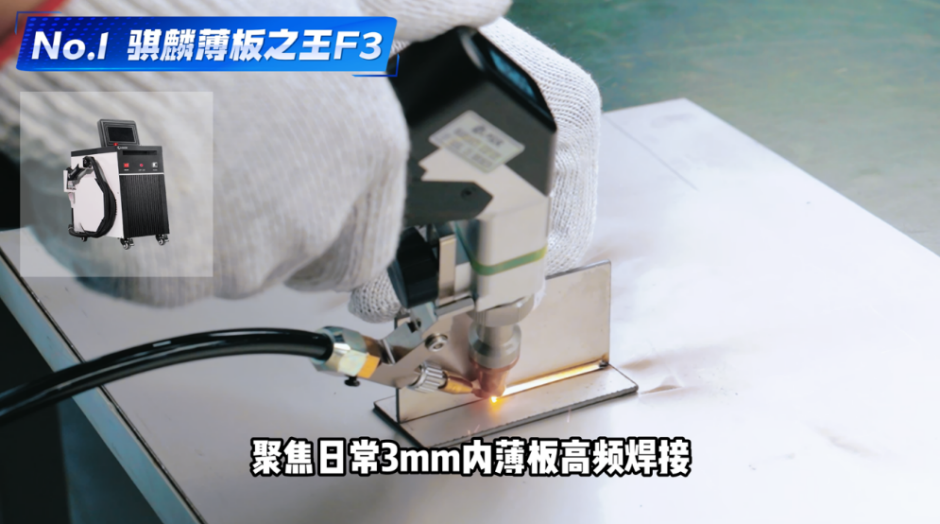
F3 thin plate dedicated model:Focusing on plates within 3mm, with an 800W power output, the welding efficiency is increased by 3 times compared to traditional argon arc welding, and the spatter rate is reduced by 80%. It is suitable for small-batch and multi-variety production scenarios such as sheet metal chassis and electrical appliance casings.
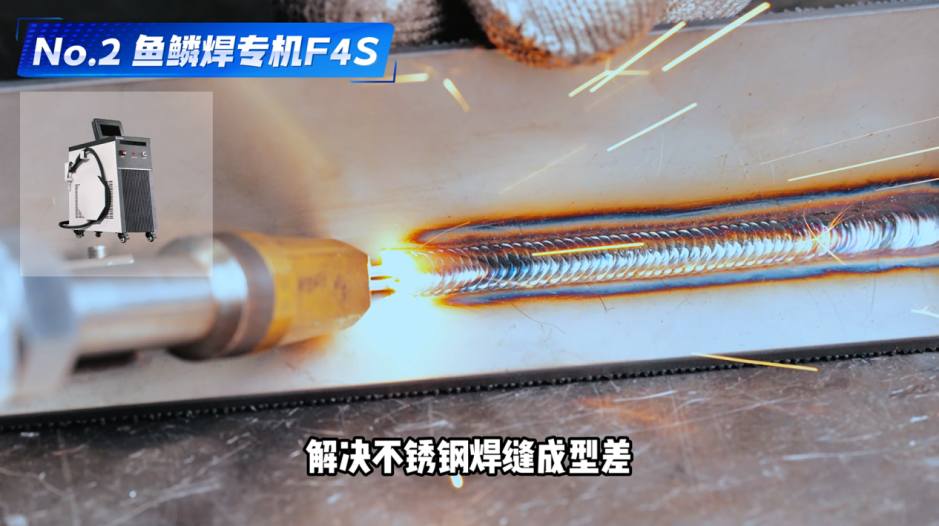
F4S stainless steel fish scale welding machine:In the double-pendulum wire feeding fish scale welding mode, the weld seam is uniform and dense, significantly reducing the workload of post-welding grinding for stainless steel. It is suitable for industries with stringent requirements for appearance and pressure resistance, such as pressure vessels, pipelines, and guardrails.
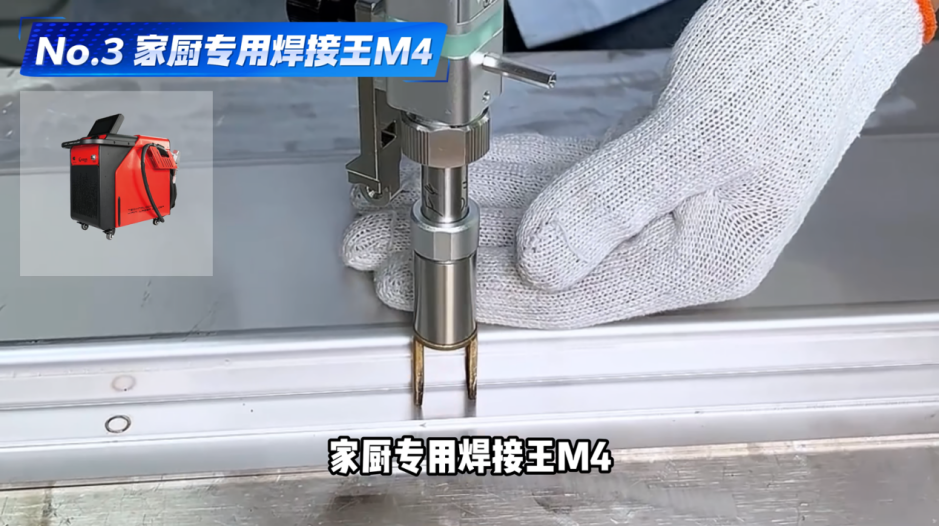
Second-generation M4 air-cooled dual-pendulum handheld welding machine:Equipped with a 1600W self-developed laser, the entire machine weighs less than 55kg, eliminating the need for an external water cooling unit. It integrates five welding modes: pulse, continuous, fish scale, line segment, and riveting. Through its unique energy storage welding and pulse thermal control algorithms, it perfectly adapts to welding 0.5-3mm stainless steel, carbon steel, and aluminum alloy sheet metal reinforcement ribs, achieving a seamless effect with fine and firm front welds and almost zero weld marks on the back. It is currently a benchmark model for cabinet sheet metal and chassis cabinet processing scenarios.
F5 galvanized sheet dedicated welding machine:Special optimization of the welding torch inclination and copper nozzle focal length has successfully reduced the welding spatter rate of galvanized sheets to an extremely low level, addressing the industry's pain point of lens burn caused by spatter.
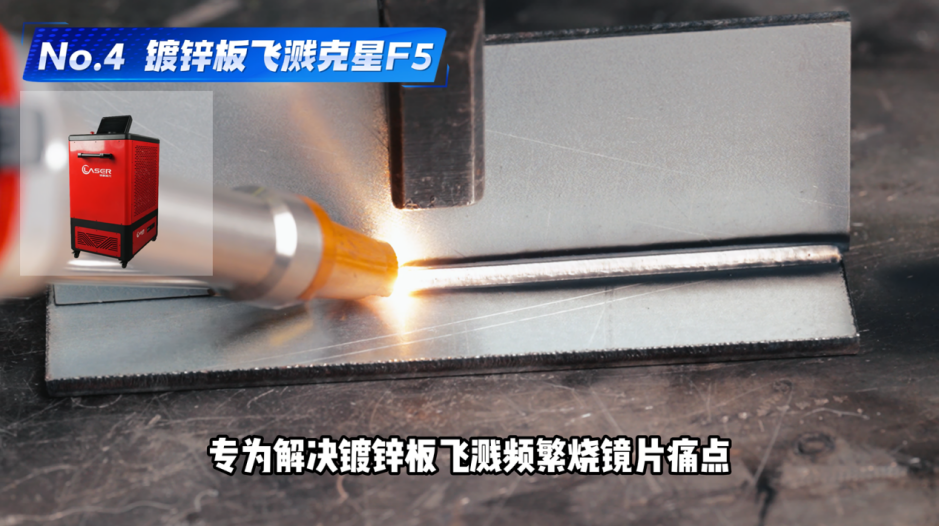
Who is it suitable for:0.5-3mm stainless steel, carbon steel, galvanized sheet; kitchen and bathroom cabinets, guardrail racks, hardware and sheet metal, etc.
2. Han's Laser | Batch production lines and bidding are more stable
Founded in 1996, it is one of the largest enterprises in China specializing in laser equipment, offering a comprehensive range of products from marking, cutting, to welding and automated lines. The P30 is its air-cooled handheld laser welder designed for civilian and power tool applications. In the realm of sheet metal work, the company adheres to a unified standard for incoming materials, manufacturing processes, and final inspections, ensuring minimal fluctuations in batch deliveries. Furthermore, its nationwide service network, invoice and bidding processes, as well as spare parts supply, are all more standardized.
3. HGTECH | For fixed workstations and continuous operations, choose water cooling
As a veteran laser equipment enterprise, its EW-1500D stands as a representative of water-cooled handheld welding machines: 1500W, water-cooled, dimensions of 650×410×640mm, powered by 220V, with a total power consumption of 8kW, equipped with a 10-meter fiber, adjustable power range from 10% to 100%, and long-term power stability within ±2%. For thin-plate batch parts, the advantage of constant temperature provided by water cooling means more stable parameters during continuous welding and better weld consistency - this in itself is the foundation for less grinding.
4. Boder Laser | An experienced veteran in sheet metal on-site
Boder has extensive experience in sheet metal processing and has achieved a relatively lightweight design for its complete machines. Its handheld welding machine weighs 7-9kg, and the 2000W model can achieve a welding speed of 3-6m/min, making it suitable for relatively standardized workpieces such as sheet metal, metal furniture, and elevator tracks.
5. Jasic | Channel expansion, winning with nearby management
Jasic is a veteran enterprise in the welding machine field, offering two product lines for handheld laser welding: air-cooled and water-cooled. Its advantage lies in its deep penetration into channels and high density of after-sales service outlets. It is suitable for hardware stores, repair shops, and small factories in county markets.
6. Megmeet | Originating from welding power sources, it serves multiple purposes
The LUX series, featuring a four-in-one functionality (welding, cutting, rust removal, and weld cleaning), is available in three power ranges: 1500/2000/3000. It supports welding thicknesses ranging from 0.5 to 4mm and offers support for storing up to 10 sets of parameters, along with dual temperature and dual control water cooling.
7. UW Laser | Precision thin plates ranging from 0.1 to 1mm
UW Laser specializes in precision laser welding, with power batteries, connectors, sensors, and medical devices being its main battlegrounds. The thin plates it produces are not sheet metal plates, but more precision thin plates: stack welding, seal welding, and narrow welding seams.
IV. Conclusion
In the laser welding market for thin plates in 2026, three trends have become clear. On the one hand, air cooling is replacing water cooling. From 1.2kW to 2.6kW, air cooling has made maintenance-free and movable options the default choice in thin plate workshops. On the other hand, no-grinding has evolved from being a selling point to a standard feature. In the past two years, it was still a demonstration project at exhibitions, but now customers ask directly whether grinding can be avoided. Additionally, competition has shifted from machines to processes. With the same power, whoever has a parameter library that is more closely aligned with galvanized plates, aluminum plates, and stiffeners will experience fewer after-sales issues. That's it for this sharing. Thank you for reading, and see you next time!
